
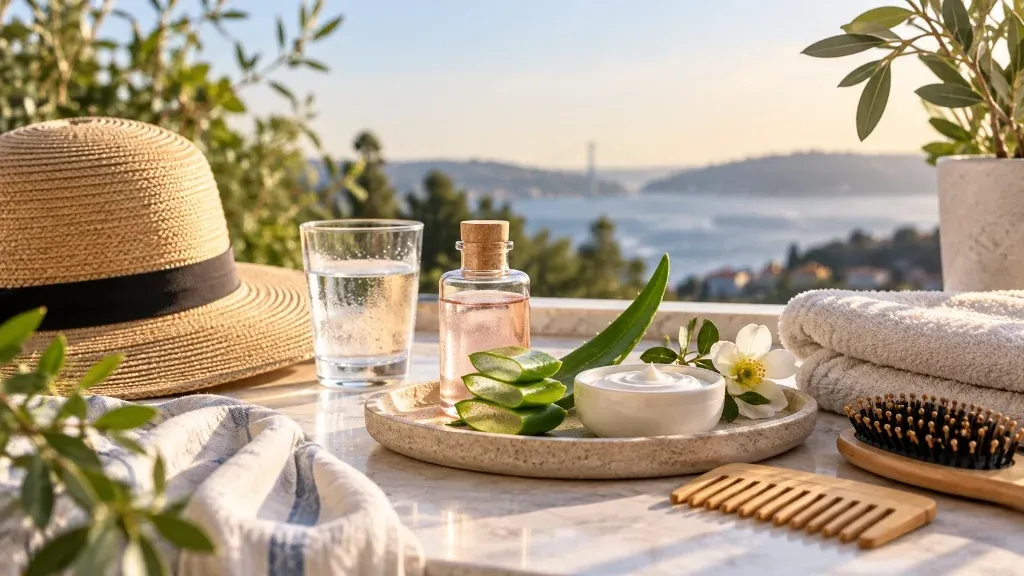
Post-Summer Skin and Hair Care: Practical Dermatologist Tips
30+ years of medical experienceMedical information
During summer, factors such as sun exposure, seawater, pool chlorine, high temperatures and frequent showers can affect both our skin and hair. By the end of summer, dryness and sensitivity on the skin, as well as dullness, dryness and fragility in the hair, can become more noticeable.
The goal of post-summer care is not to aggressively "resurface" skin or hair, but to support the compromised moisture barrier, reduce irritation, and return to protective daily habits.
What should you pay attention to in post-summer skin and hair care?
Gentle cleansing, consistent moisturising and ongoing sun protection are essential for post-summer skin. For hair, rinsing with fresh water after swimming, using appropriate conditioners and minimising high-heat styling are beneficial. If you notice pronounced pigmentation, persistent redness, excessive hair shedding or scalp conditions, consulting a dermatologist is advised over relying solely on home remedies.
What is the first step in post-summer skincare?
The first step is cleansing without compromising the skin barrier.
Using a gentle, skin-type appropriate cleanser is sufficient for most people. Very hot water, harsh scrubs and aggressive chemical peels can exacerbate dryness and redness, particularly on sun-exposed or sensitized skin.
Rose water may be used as a refreshing cosmetic toner by some individuals. However, for sensitive, eczema-prone or rosacea-prone skin, botanical and fragranced preparations can cause irritation, making personalised product selection essential.
Why does skin need more hydration after summer?
Sun, heat, sea salt and chlorine increase trans-epidermal water loss.
Applying a suitable moisturiser immediately after cleansing helps reinforce the lipid barrier.
Aloe vera-based formulations can provide soothing relief for sun-stressed skin, though not every natural home ingredient is inherently hypoallergenic or suitable for reactive skin.
Cucumber and high-water-content ingredients can offer temporary cooling, but cannot replace an effective physiological moisturiser.
Should homemade scrubs and peels be used?
Many wish to exfoliate after summer to restore skin radiance. However, aggressive scrubs on sun-exposed, red or pigmentation-prone skin should be avoided.
Coffee grounds and coarse sugar crystals are physically abrasive and can create micro-tears in the skin barrier.
Direct application of acidic kitchen ingredients like lemon juice can trigger phytophotodermatitis and severe irritant contact dermatitis.
When addressing post-summer sun damage and dark spots, seeking a professional dermatological evaluation is safer than DIY exfoliation.
Learn more on our skin pigmentation and melasma service page.
How should oily skin be managed after summer?
Oily skin also requires moisture.
Attempting to completely strip facial oils with harsh cleansers often triggers reactive sebum overproduction. A balanced routine consists of gentle cleansing and a non-comedogenic, lightweight moisturiser.
While topical green tea polyphenols (specifically EGCG) have shown promise in clinical dermatological studies for regulating sebum and reducing inflammatory acne lesions, homemade brewed tea does not replicate formulated concentrations.
Persistent acne or excessive oiliness warrants professional assessment rather than frequent product switching.
Is applying apple cider vinegar, lemon or sugar safe for the face?
"Natural" ingredients from the kitchen are not necessarily safe for topical facial application.
Acidic substances like vinegar and lemon disrupt the skin's acidic mantle, while coarse sugars cause mechanical trauma to the stratum corneum.
Gentle, dermatologically tested formulations suited to your skin type provide reliable protection.
Should sunscreen be stopped in autumn?
No.
Ultraviolet radiation (especially UVA, which contributes to photoageing and hyperpigmentation) remains present year-round regardless of season or cloud cover.
Daily broad-spectrum sunscreen with SPF 30 or higher remains the cornerstone of maintaining post-summer skin health.
Why does hair appear dry and dull after summer?
Cumulative exposure to UV rays, salt water and chlorine degrades the outer hair cuticle and depletes natural protective lipids.
This leaves the hair shaft porous, brittle, frizzy and prone to breakage.
Rinsing hair promptly with fresh water after swimming and applying a nourishing conditioner reduces chlorine retention.
What home steps help post-summer hair?
Conditioning products tailored to your hair shaft porosity are key.
Cosmetic oils like coconut oil can help reduce protein loss in damaged hair fibres, while argan oil enhances softness and shine. However, cosmetic hair oils should not be confused with medical treatments for hair loss.
Does rosemary oil treat hair loss?
Rosemary oil has gained significant interest in hair care. While limited studies suggested potential benefits in androgenetic hair loss, current clinical evidence does not support it as a universal remedy for all types of hair loss.
Furthermore, applying undiluted essential oils can cause severe contact dermatitis on the scalp.
Relying on oils without professional diagnosis can delay treatment of underlying medical conditions.
For a thorough evaluation, visit our hair loss diagnosis and treatment page.
Everyday tips to protect your hair
Minimise thermal styling tools (straighteners, curling irons), avoid vigorous towel drying, and detangle gently with wide-tooth combs on conditioned hair.
When should you consult a dermatologist?
Dull hair from summer weathering is distinct from pathological hair shedding. If you experience widening part lines, patchy bald spots, scalp itching, scaling, or sudden hair thinning, prompt dermatological examination is recommended.
Three key takeaways for post-summer care
- For skin: Gentle cleansing, adequate hydration and non-negotiable sun protection.
- For hair: Prompt rinsing after swimming, conditioning and reduced heat damage.
- For persistent issues: Professional dermatological evaluation over trial-and-error home remedies.
References
- American Academy of Dermatology — Public educational guidance on skin barrier maintenance, photoprotection, and hair shaft care.
- Peer-reviewed dermatological literature on hair fiber protection, botanical oils in cosmetic science, and scalp health.
Medical Content: Uzm. Dr. İhsaniye Dönmez Çiçek
Dermatologist — Dr Flower Clinic, Porta Vadi, Kağıthane / Istanbul
*This content is for informational purposes only and does not replace in-person medical evaluation.*
Uzm. Dr. İhsaniye Dönmez Çiçek
Dermatologist graduated from Istanbul University Faculty of Medicine. Practices clinical and aesthetic dermatology at Dr Flower Clinic in Porta Vadi, Kağıthane.
View Full Biography →